Share
Share
Dubai Residential Market Q4 2025: From Momentum to Measured Maturity
Dubai’s residential real estate market closed Q4 2025 with scale, resilience, and unmistakable depth. While transaction volumes and values eased slightly quarter-on-quarter, the broader picture remains one of maturity rather than slowdown. Capital continues to flow, prime assets continue to reset benchmarks, and off-plan demand remains firmly in control of market share.
Here we break down what actually happened in Q4 2025, what the numbers reveal beneath the surface, and how investors, end users, and landlords should interpret the data moving into 2026.
Dubai Residential Market Performance in Q4 2025
During the final quarter of 2025, Dubai recorded:
- 53,985 residential transactions
- AED 142.41 billion in total transaction value
- Average price of AED 1,932 per sq. ft
- 1,639 prime property transactions
- 60 new residential projects launched
On a quarter-on-quarter basis, transaction volumes declined by 3%, while total value declined by 8%. Importantly, this adjustment followed several consecutive quarters of elevated performance, positioning Q4 as a period of consolidation rather than contraction.
Transaction Trends: Context Matters
Q4 2025 marked one of the highest quarterly transaction volumes on record, trailing only Q3 2025. Over the past four years, Dubai’s residential market has expanded significantly, and Q4’s figures reinforce that activity remains structurally strong.
Transaction values reached AED 142.41 billion, confirming that buyer appetite, particularly in mid-to-upper segments remains intact, even as deal velocity stabilised.
In practical terms, this signals a market shifting from rapid acceleration into price discovery and selectivity.
Buyer Behaviour: Cash Dominates
One of the most defining characteristics of Dubai’s residential market in Q4 2025 was buyer funding structure:
- 63% of transactions were cash purchases
- 37% were mortgage-backed
This continued dominance of cash buyers reflects sustained interest from high-net-worth individuals, global investors, and equity-led buyers. It also contributes to overall market stability, reducing systemic exposure to interest rate fluctuations
Residential Pricing Trends by Property Type
Pricing dynamics varied significantly across asset classes:
- Hotel Apartments: AED 2,490 per sq. ft
- Villas: AED 2,293 per sq. ft
- Apartments: AED 1,966 per sq. ft
- Townhouses: AED 1,439 per sq. ft
Hotel apartments and villas continued to command premium pricing, driven by lifestyle positioning, limited supply, and end-user appeal. Townhouses, meanwhile, remained the most accessible segment, supporting sustained absorption.
Off-Plan vs Ready: Primary Market in Control
Off-plan transactions once again dominated Dubai’s residential market in Q4 2025.
Primary (Off-Plan) Market
- 37,771 transactions
- AED 81.92 billion in total value
- Average price: AED 2,036 per sq. ft
Secondary (Ready) Market
- 16,214 transactions
- AED 60.49 billion in total value
- Average price: AED 1,683 per sq. ft
Off-plan deals accounted for 70% of all residential transactions, confirming that buyers continue to favour future-facing developments, flexible payment structures, and new inventory.
Inside the Off-Plan Sector
Off-plan activity in Q4 2025 was overwhelmingly driven by initial sales, which represented 93% of transactions, while resale off-plan activity accounted for just 7%.
Apartments remained the dominant off-plan asset class, recording 34,721 transactions during the quarter.
Top Developers by Off-Plan Transactions
- Binghatti
- Emaar
- DAMAC Properties
- Sobha Group
- Danube Properties
This concentration highlights the role of established developers in driving buyer confidence and market liquidity.
Prime Residential Market: Benchmark Territory
Dubai’s prime residential segment continued to redefine the upper limits of pricing in Q4 2025.
Headline Transactions
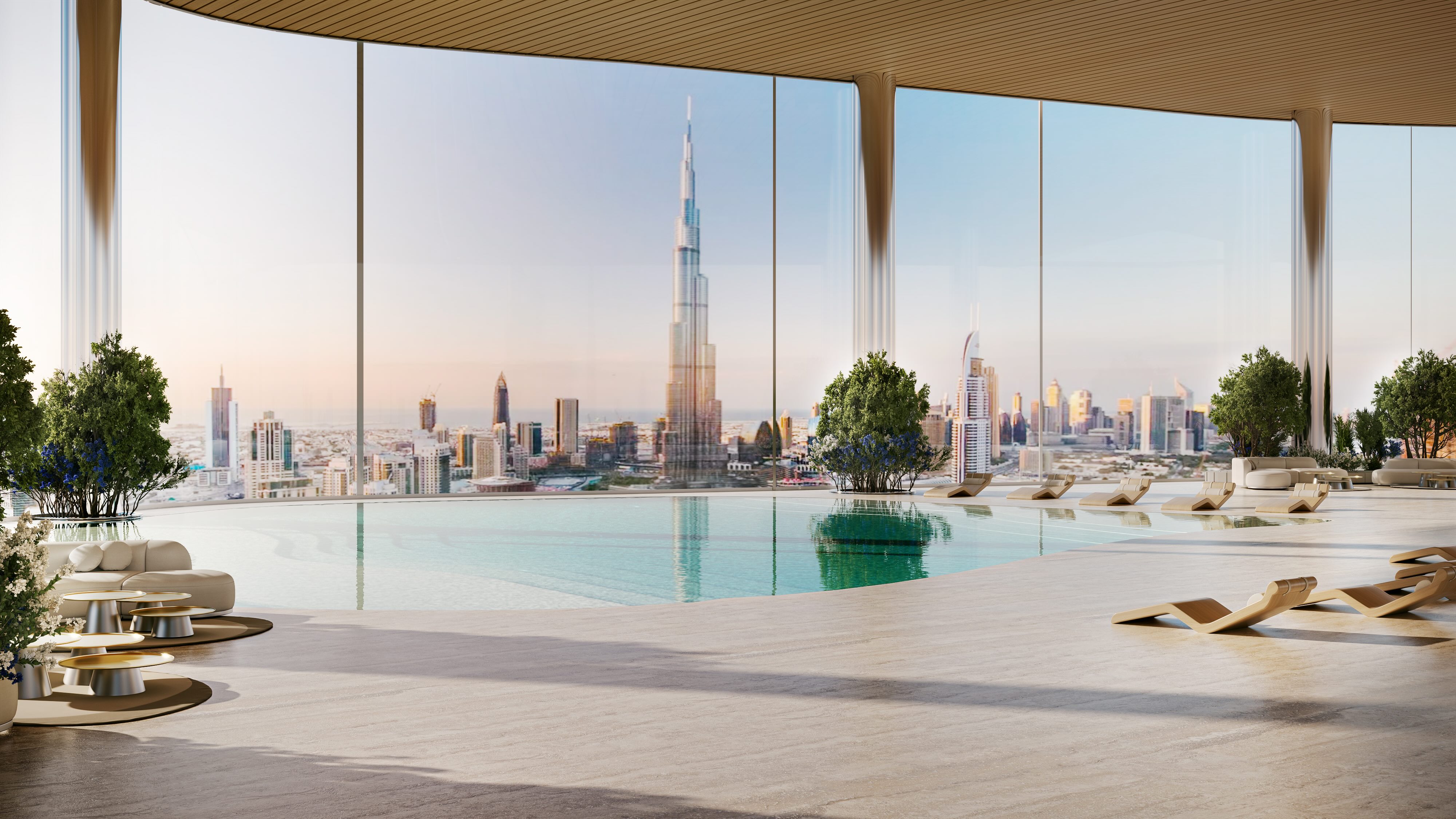
- AED 550 million penthouse sale at Bugatti Residences, Business Bay
- Highest price per sq. ft: AED 19,000 (Villa at Frond L, Palm Jumeirah)
Prime Apartment Pricing by Community
- Jumeirah Bay Island: AED 7,054 per sq. ft
- Jumeirah: AED 4,225 per sq. ft
- La Mer: AED 3,536 per sq. ft
- Bluewaters Island: AED 3,256 per sq. ft
These figures reinforce Dubai’s status as a global destination for ultra-prime residential capital.
Dubai Leasing Market: Strong and Sticky
Activity remained high across all unit types, but what stands out most is not just the number of rental contracts, it’s the behaviour behind them. Renewals continued to outpace new leases, signalling that tenants are choosing to stay put rather than relocate. This points to a market where affordability is being balanced against lifestyle, location, and long-term residency decisions.
Rental pricing remains firm across the board, particularly for larger units, reflecting sustained demand from families and longer-term residents. The leasing market is no longer driven purely by short-term population inflows; instead, it is increasingly supported by residents embedding themselves deeper into the city. From an investment perspective, this creates a stable income environment, reinforcing Dubai’s appeal as a yield-driven residential market rather than a purely speculative one.
Future Supply: What’s Coming to Market
Dubai’s future residential supply pipeline is substantial, but it is also clearly structured and phased. The bulk of new deliveries is concentrated over the next few years, with a strong skew toward apartments. This is not surprising given the city’s ongoing urban expansion, infrastructure-led communities, and developer focus on scalable residential formats.
What matters more than volume, however, is composition. Apartments dominate upcoming supply, while villas, townhouses, and hotel residences remain comparatively limited. This imbalance suggests that while mid-market and upper-mid segments will see healthy competition, lifestyle-driven and low-density assets are likely to retain pricing power. The tapering of supply in later years also hints at a market that has visibility on future delivery rather than one building blindly into excess.
What Q4 2025 Tells Us
Q4 2025 was not a quarter of extremes, it was a quarter of clarity. Transaction volumes and values softened slightly, but within the context of an exceptionally strong year. Buyer behaviour remained disciplined, cash participation stayed high, and demand continued to flow toward off-plan and prime assets. The market showed no signs of stress, only selectivity.
What the data ultimately tells us is that Dubai’s residential market is transitioning from momentum-led growth into a more mature, segmented phase. Price discovery is becoming more precise, buyers are more intentional, and fundamentals rather than hype are driving decisions. For investors and end users alike, this is a healthy signal. The market is not slowing down; it is settling into itself.